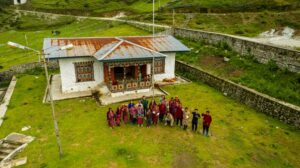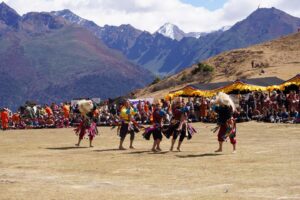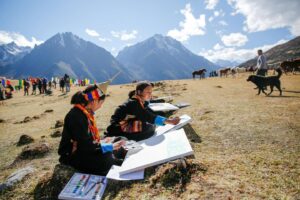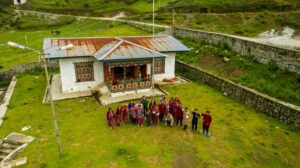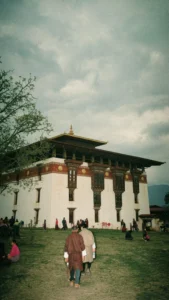
Khoma · Lhuntse, Eastern
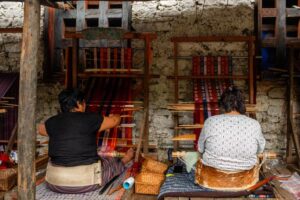
The weaving village behind Bhutan’s most treasured textile, the kushuthara. Watch women at backstrap looms coax patterns that take months to finish, and understand why these cloths are heirlooms, not souvenirs.
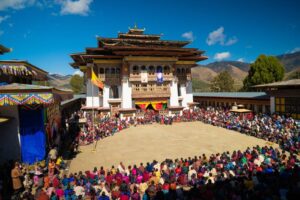
Namgyel Plaza/Avenue 28 Building

The weaving village behind Bhutan’s most treasured textile, the kushuthara. Watch women at backstrap looms coax patterns that take months to finish, and understand why these cloths are heirlooms, not souvenirs.

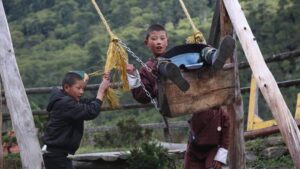
The village beside the glacial valley where black-necked cranes winter. Farmhouses, potato fields, and a great monastery on the ridge, community and conservation living side by side. GNH you can walk through.

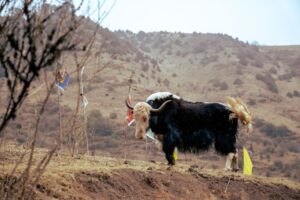
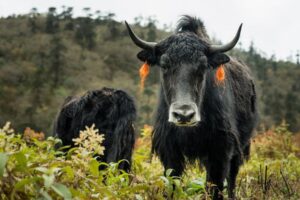
The far-eastern homeland of the Brokpa herders, opened to visitors only recently. Yak caravans, unique dress, and dances seen nowhere else in Bhutan. For travellers who want the road to genuinely end.

A remote highland village at 3,800m, home to the semi-nomadic Layap people with their distinctive conical bamboo hats and yak-herding life. Reached only on foot, it rewards the effort with a culture found nowhere else.

A living heritage village built around a noble family’s manor, now a museum kept by descendants. Sleep in restored quarters, walk fields worked for generations, and step straight into Bhutan’s feudal past.

A high, timeless valley village of clustered homes and cobbled paths, wrapped in sheep pasture and buckwheat fields. Its yak-herding roots and famous Ura Yakchoe festival make it one of the most atmospheric villages in the country.

Home to one of Bhutan’s first community-based tourism trails, where villagers themselves host, guide, and feed you. Warm, low-impact, and a model of travel that funds the community directly. Exactly the kind of place GoSD is built to champion.

The village below Chimi Lhakhang, the fertility temple of the “Divine Madman.” Walk the paddy-field path lined with phalluses painted on every wall, part folk belief, part cheerful Bhutanese humour, all unforgettable.

A tight cluster of stone houses stacked on a hillside facing Wangdue Dzong, one of Bhutan’s oldest settlements, famous for its master masons. Narrow lanes, no vehicles, and a way of life little changed in centuries. A short, rewarding walk into old Bhutan.

A short, hands-on community activity, a village trail clean-up, a school visit, a local project, folded into your trip. Travel that leaves the place a little better than you found it. This is the one MyBhutan can’t easily copy, and the one most true to who you are.

A quiet hour of guided stillness with a practising monk, in a place built for it. Not a performance, a genuine pause, GNH you can feel rather than read about.

River stones fire-heated until they hiss into a wooden tub of mineral water and artemisia leaves. Centuries-old, deeply restorative, and the perfect end to a trekking day.

Harvest with a Bhutanese family, grind chillies for ezay, and share the meal you helped cook around a farmhouse fire. Slow travel at its warmest.

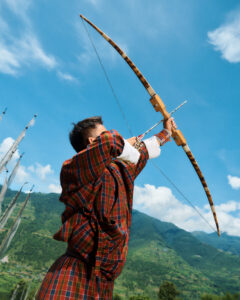
Bhutan’s national sport, taught by locals who still tease and sing between shots. Draw a bamboo bow, miss gloriously, and understand the country a little better.

Quiet backroads and forest tracks through villages most tours drive past. Two wheels, clean air, and the freedom to stop wherever the moment asks you to.

The Mo Chhu carries you past the great Punakha Dzong on water that’s glacier-clean by law. Gentle enough for first-timers, thrilling enough to remember.

The classic multi-day trek between the two valleys, past alpine lakes, high camps, and no roads at all. Bhutan at walking pace, the way it’s meant to be met.Druk Path Trek · Paro to Thimphu
The classic multi-day trek between the two valleys, past alpine lakes, high camps, and no roads at all. Bhutan at walking pace, the way it’s meant to be met.

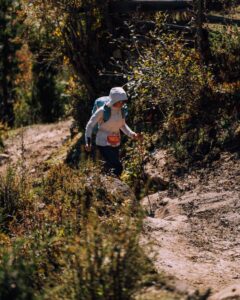
From Bhutan’s highest motorable pass, a ridge trail through fluttering prayer flags with the Himalayas laid out to the north. Big scenery, moderate effort, unforgettable light at dawn.

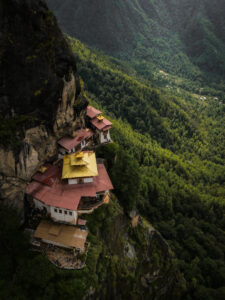
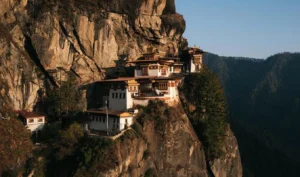
The pilgrimage every visitor dreams of, up through blue-pine forest to a monastery clinging to a cliff at 3,120m. We time your climb to beat the crowds and pause where the view, not the summit, is the reward.

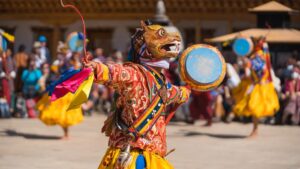
Deep in the far east, the Brokpa people perform the yak dance and dances found nowhere else in Bhutan. Remote, rarely touristed, and all the more authentic for it, a festival for the true explorer.

A gathering of Bhutan’s nomadic and semi-nomadic communities from across the highlands. Yak products, traditional attire, music, and food, a rare chance to meet the people of the high passes in one place.

Held in the courtyard of Gangtey Monastery to welcome the rare black-necked cranes that winter in the valley. Schoolchildren perform crane dances, and conservation sits at the heart of the celebration, GNH made visible.

Held at 4,000 metres in the remote village of Laya, this celebrates Bhutan’s highlanders, yak beauty pageants, mastiff shows, highland cuisine, and horse races. A festival born of His Majesty’s vision to honour mountain communities.

A living-culture celebration rather than a religious one. Nomadic lifestyles, yak herding, traditional sports, local ara and food, all in one of Bhutan’s least-visited valleys. A warm, hands-on window into highland life.

Known for the Raksha Mangcham, the Dance of the Ox, and closing folk songs sung only here. An intimate festival with deep local roots, held before the newly rebuilt dzong.

Famous for the Mewang, the fire ceremony, where crowds run beneath a flaming gate for blessings, and the Tercham, the midnight naked dance performed by lamplight to bestow fertility. Ancient, mystical, and unlike anything else in the Bhutanese calendar.

A festival with the drama of history built in. The Drubchen re-enacts Bhutan’s 17th-century victory over Tibetan invaders, with locals cast as warriors, before flowing into the sacred Tshechu. Set against the honey-coloured walls of Punakha Dzong at the meeting of two rivers.

The capital’s biggest gathering, drawing tens of thousands in their finest kira and gho. Three days of chham dances in the Tashichho Dzong courtyard, part worship, part homecoming, part the whole valley dressed in colour. The easiest tshechu for first-time visitors to witness.

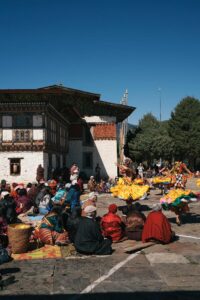
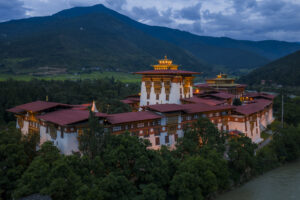
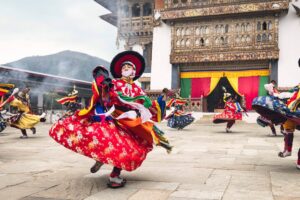
One of Bhutan’s grandest festivals, held each spring in the courtyard of Rinpung Dzong. Monks in silk brocade perform sacred mask dances passed down for centuries, and on the final dawn a giant thongdrel, a sacred appliqué scroll, is unfurled at first light. To simply see it is said to cleanse a lifetime of sins.

Nutty, nutment-hued, grown in the Paro valley for centuries. The quiet staple that anchors every meal.

Steamed dumplings stuffed with cheese, beef, or greens, pleated by hand. Bhutan’s most loved comfort food and the perfect trail lunch.

The traditional home-brewed spirit, distilled from rice, maize, or wheat. Often warmed with egg and butter. A taste of village hospitality, poured generously.

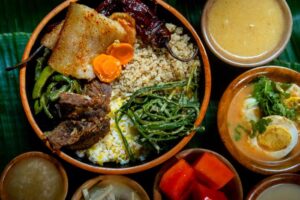
The full experience: a low table laid with datshi, red rice, ezay, and ara, shared cross-legged with a Bhutanese family. Not just a meal, but the country’s whole philosophy of welcome.

The heart of every Bhutanese table. Green and red chillies simmered in soft local cheese, more curry than side dish. Bold, fiery, and unmistakably Bhutan on a plate.

Challenge yourself with an unforgettable trekking adventure through Bhutan’s breathtaking mountain trails. Camp beneath the stars, explore untouched landscapes, and experience the beauty of nature with every step.

Escape into Bhutan’s pristine wilderness with the perfect blend of adventure and comfort. Experience luxury camping, scenic hikes, campfires under the stars, and unforgettable moments surrounded by nature.

Discover the best of Bhutan while enjoying comfortable mid-range accommodations. Explore iconic landmarks, immerse yourself in local culture, and travel through breathtaking valleys for a relaxing and memorable journey.

Challenge yourself with an unforgettable trekking adventure through Bhutan’s breathtaking mountain trails. Camp beneath the stars, explore untouched landscapes, and experience the beauty of nature

Escape into Bhutan’s pristine wilderness with the perfect blend of adventure and comfort. Experience luxury camping, scenic hikes, campfires under the stars, and unforgettable moments

Discover the best of Bhutan while enjoying comfortable mid-range accommodations. Explore iconic landmarks, immerse yourself in local culture, and travel through breathtaking valleys for a

Nutty, nutment-hued, grown in the Paro valley for centuries. The quiet staple that anchors every meal.

Steamed dumplings stuffed with cheese, beef, or greens, pleated by hand. Bhutan’s most loved comfort food and the perfect trail lunch.

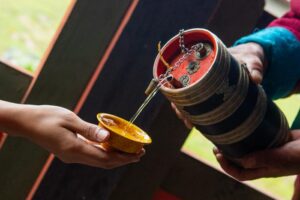
The traditional home-brewed spirit, distilled from rice, maize, or wheat. Often warmed with egg and butter. A taste of village hospitality, poured generously.

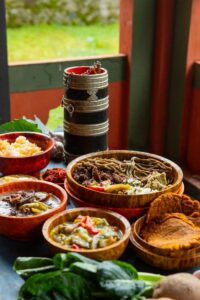
The full experience: a low table laid with datshi, red rice, ezay, and ara, shared cross-legged with a Bhutanese family. Not just a meal, but the country’s whole philosophy of welcome.

The heart of every Bhutanese table. Green and red chillies simmered in soft local cheese, more curry than side dish. Bold, fiery, and unmistakably Bhutan on a plate.

Deep in the far east, the Brokpa people perform the yak dance and dances found nowhere else in Bhutan. Remote, rarely touristed, and all the more authentic for it, a festival for the true explorer.

A gathering of Bhutan’s nomadic and semi-nomadic communities from across the highlands. Yak products, traditional attire, music, and food, a rare chance to meet the people of the high passes in one place.

Held in the courtyard of Gangtey Monastery to welcome the rare black-necked cranes that winter in the valley. Schoolchildren perform crane dances, and conservation sits at the heart of the celebration, GNH made visible.

Held at 4,000 metres in the remote village of Laya, this celebrates Bhutan’s highlanders, yak beauty pageants, mastiff shows, highland cuisine, and horse races. A festival born of His Majesty’s vision to honour mountain communities.

A living-culture celebration rather than a religious one. Nomadic lifestyles, yak herding, traditional sports, local ara and food, all in one of Bhutan’s least-visited valleys. A warm, hands-on window into highland life.

Known for the Raksha Mangcham, the Dance of the Ox, and closing folk songs sung only here. An intimate festival with deep local roots, held before the newly rebuilt dzong.

The weaving village behind Bhutan’s most treasured textile, the kushuthara. Watch women at backstrap looms coax patterns that take months to finish, and understand why these cloths are heirlooms, not souvenirs.
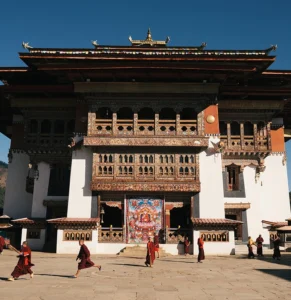
The village beside the glacial valley where black-necked cranes winter. Farmhouses, potato fields, and a great monastery on the ridge, community and conservation living side by side. GNH you can walk through.

The far-eastern homeland of the Brokpa herders, opened to visitors only recently. Yak caravans, unique dress, and dances seen nowhere else in Bhutan. For travellers who want the road to genuinely end.

A remote highland village at 3,800m, home to the semi-nomadic Layap people with their distinctive conical bamboo hats and yak-herding life. Reached only on foot, it rewards the effort with a culture found nowhere else.

A living heritage village built around a noble family’s manor, now a museum kept by descendants. Sleep in restored quarters, walk fields worked for generations, and step straight into Bhutan’s feudal past.

A high, timeless valley village of clustered homes and cobbled paths, wrapped in sheep pasture and buckwheat fields. Its yak-herding roots and famous Ura Yakchoe festival make it one of the most atmospheric villages in the country.

The weaving village behind Bhutan’s most treasured textile, the kushuthara. Watch women at backstrap looms coax patterns that take months to finish, and understand why these cloths are heirlooms, not souvenirs.
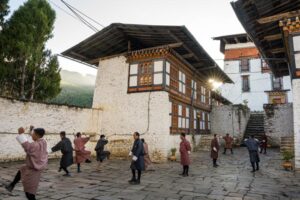
The village beside the glacial valley where black-necked cranes winter. Farmhouses, potato fields, and a great monastery on the ridge, community and conservation living side by side. GNH you can walk through.

The far-eastern homeland of the Brokpa herders, opened to visitors only recently. Yak caravans, unique dress, and dances seen nowhere else in Bhutan. For travellers who want the road to genuinely end.

A remote highland village at 3,800m, home to the semi-nomadic Layap people with their distinctive conical bamboo hats and yak-herding life. Reached only on foot, it rewards the effort with a culture found nowhere else.

A living heritage village built around a noble family’s manor, now a museum kept by descendants. Sleep in restored quarters, walk fields worked for generations, and step straight into Bhutan’s feudal past.
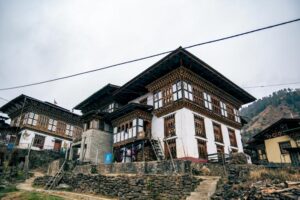
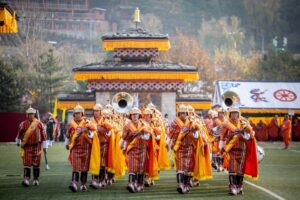
A high, timeless valley village of clustered homes and cobbled paths, wrapped in sheep pasture and buckwheat fields. Its yak-herding roots and famous Ura Yakchoe festival make it one of the most atmospheric villages in the country.
Stories from the valleys, festival dates worth planning around, and journeys we’re dreaming up
a letter from the Kingdom, once a month.
No noise, no spam — just Bhutan. Unsubscribe anytime.